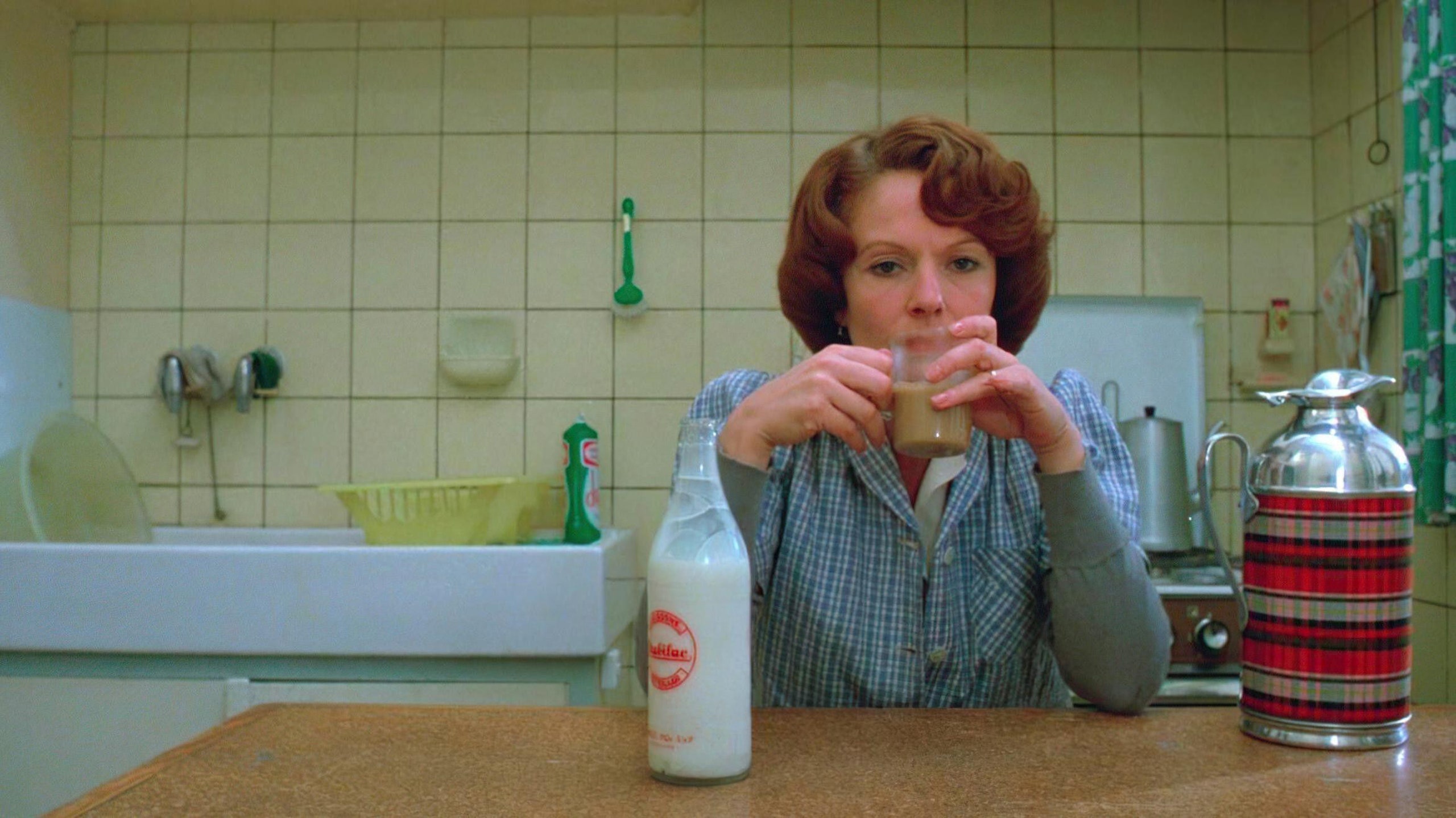
February’s installment of Sidewalk Film 101 showcases one of the landmark works of American independent cinema, Charles Burnett’s Killer of Sheep.
Filmed in the Watts neighborhood of Los Angeles in 1972 and 1973, the film was made for Burnett’s Master of Fine Arts thesis at UCLA on a budget of about $10,000, drawing inspiration from the documentary-style grittiness of the Italian neorealists (we’ll be screening one of the most famous of these films, Roberto Rossellini’s Rome Open City, for August’s Sidewalk Film 101). Burnett was never able to secure a wide release for the film due to issues surrounding the music rights for the tracks used in the film, but after playing at several festivals in the late ‘70s and early ‘80s, the film grew in reputation and critical acclaim. It finally received an American theatrical release in 2007, almost 30 years after its initial screenings, and has subsequently been renowned as one of the finest American indies ever made — and a major work in a movement that came to be known as the L.A. Rebellion, which encompasses the works of a generation of Black filmmakers who learned the craft at UCLA from the late ‘60s to the early ‘90s. This movement includes other major figures in Black independent film like Julier Dash, Haile Gerima, Zeinabu irene Davis, and Billy Woodberry — many of whom received minimal attention at the time of their films’ releases, but whose work has heralded by the next generation of indie filmmakers and now sit atop lists of some of the most important American films of all time.
Before you join us for Killer of Sheep on Thursday, Feb. 19, at 7 p.m., or Sunday, Feb. 22, at 1 p.m. for our Sidewalk Film 101 screenings, check out these links to some supplementary reading on the film and the L.A. Rebellion.
- An interview with Charles Burnett on the making of Killer of Sheep: https://www.bfi.org.uk/sight-and-sound/interviews/slaughterhouse-blues-charles-burnett-killer-sheep
- The Criterion Collection essay for the 4K restoration of the film: https://www.criterion.com/current/posts/8817-killer-of-sheep-everyday-blues
- A primer on the L.A. Rebellion and some of its most famous works from MUBI: https://mubi.com/en/notebook/posts/notebook-primer-l-a-rebellion-9583
Join us at either of our Sidewalk Film 101 screenings for a special intro by the Sidewalk Cinema programming director, Corey Craft, before the film. We hope to see you there!
Get tickets to our Sidewalk Film 101 screenings of Killer of Sheep here.
Made in the late 1950s at the tail end of the most significant period of Hitchcock’s storied career — right in between


Humanity’s first contact with aliens gets the full cinematic treatment in Arrival, where Denis Villeneuve’s deliberate pacing and signature visual style transform the story into something both grand and intimate. By dropping us into the research team’s daily mission briefs, the film makes us feel like participants in the painstaking work of discovery, reminding us just how unglamorous and methodical such a job would really be. At its heart, the story brings us to a crossroads: humanity’s ultimate test isn’t firepower, but communication. They say art imitates life, and Arrival plays less like science fiction and more like a training manual for a future that feels not just possible, but inevitable. Preparations begin this Friday at Sidewalk!
The original Matrix was easily one of those oddly defining sci-fi movies for me as a kid. It was the perfect balance of action, grit, and fantasy for a kid who loved computers, video games, and the occasional roundhouse kick. It stood out at the height of the Y2K craze and really pushed filmmaking techniques into seemingly new territory at the time. Most importantly for me, it gave such a memorable (now almost prophetic) take on the ever evolving digital age.
What I’ve loved about sci-fi movies is their ability to boldly explore the multitude of possibilities that science has to offer humanity, whether it be good or bad. The Matrix is a special sci-fi achievement not only for its sensational technical adventure, but for its mind-blowing premise challenging us to think about our own reality at times. In the digital era we live in, it’s both fascinating and alarming to see how far technology has come as well as how much it will influence our lives. Science fiction stories are not just places we look for something exciting to explore, but also reminders to tread carefully in these explorations into the unknown. A film like The Matrix pushed the boundaries in spectacular fashion as to what sci-fi will be in a modern world, while still providing us a wildly entertaining story we can’t ever forget.
Men in Black is such a fun introduction to Sci-Fi films! Vincent D’Onofrio’s performance is jaw dropping. The aliens are iconic. I have fond memories of Happy Meal tie-in toys based on the characters. This film, as goofy as it is, really makes you think about the world around you and the people you interact with everyday.
Wall•E is such a heartwarming and kind story amongst a dystopian/futuristic/sci-fi background. It’s iconic and a must-see in theaters!
Josh Hickman, Vice President
Jamie Plott, Treasurer
Laura Chappell, Board Member
Gail Pless, Board Member
The schedule for

This Is Ballroom 

The White House Effect